There is a dream I’ve had twice in my life, which has never left me. I was 11 or 12 when it first appeared, and maybe close to 20 when I had it again. It is as clear in my mind as it was those years ago.
I’m standing in the smoking ashes of a nuclear explosion. Quickly, I sense that this was either Hiroshima or Nagasaki, though which is never clear. Before me is a vast, levelled landscape, which dips down and back up again and carries on to an orange horizon of hills. There are no people, just utterly flattened wreckage of a city whose foundations have been blown away. I look down and there are worse things below my feet. Unspeakable charcoal and toxic dust. That is the dream.

Later, as I learned art, this dream became intertwined with Edvard Munch’s 1893 painting, The Scream, whose wavy lines capture the heat, terror and surreality of the dream, and its orange horizon.
On Friday, I went to see Oppenheimer at an opening day noon showing. With little planning, I just found myself at a coffeeshop near the cinema, rushing to deliver a last piece of magazine copy and then buying a lemonade and settling into a half-empty theatre.
To say it had an impact would be an understatement. It was also problematic in aspects, does not pass the Bechdel test and does not feature a woman speaking for the first approximately 30 minutes (and then it’s basically a sex scene) – but makes me wonder whether that’s the film’s fault or the era it depicts?
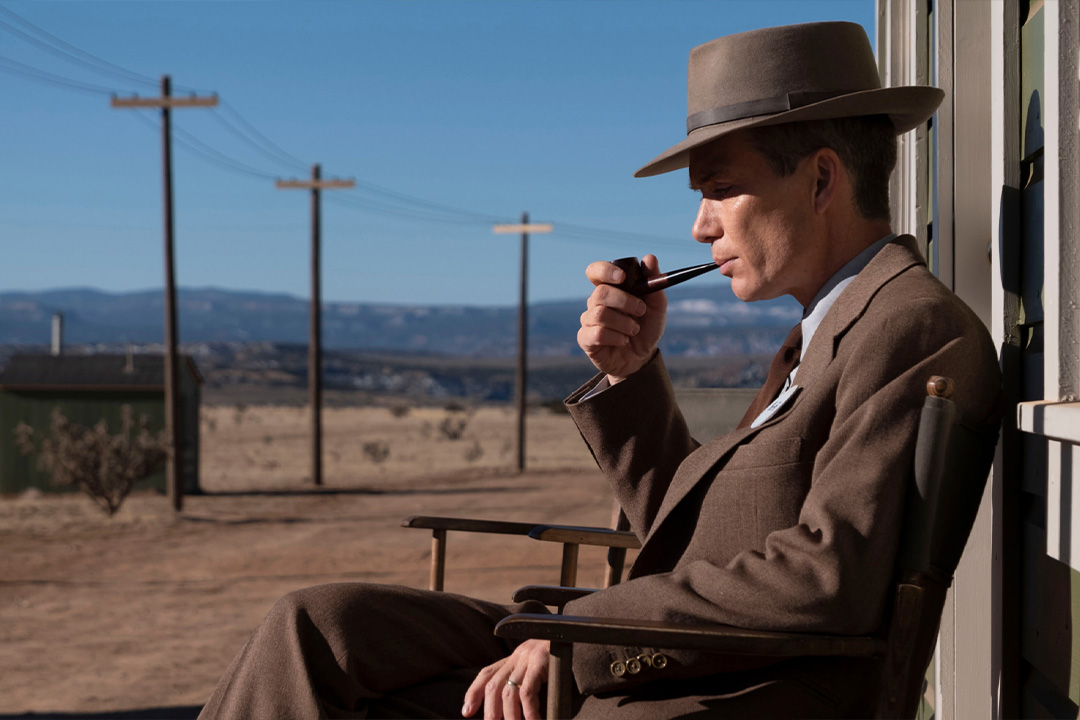
This is not a film review, but everyone should see Oppenheimer if they can. Artistically, it is groundbreaking and beautiful, particularly its use of black-and-white versus colour to indicate parallel and overlapping timelines, and its incredible sound. It could have used some editing for length, and it glorified yet another tortured white male genius while conveniently forgetting about the Indigenous and Hispanic people exploited by the Manhattan Project. The scene showing the moment of nuclear impact during the test is unexpected and physically stunning and it will stay with me for the rest of my life.
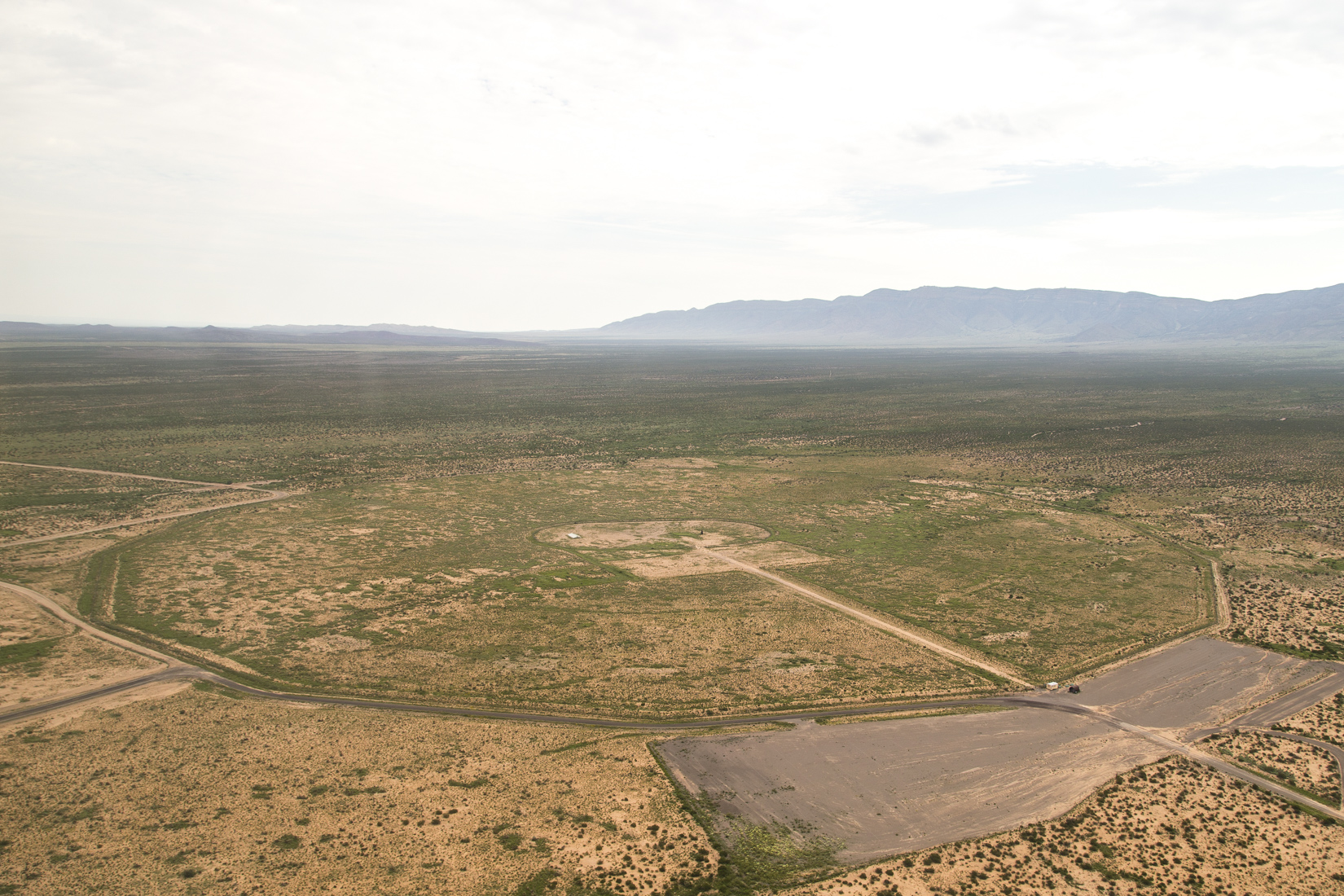
When I was young, my father took me and my sister to visit the Trinity Site where the test was conducted. The site is located at a restricted place within White Sands Missile Range in the central New Mexico desert, which was developed as a nuclear testing site in the atomic boom period (ahem) after World War II. It is located on a wide, flat piece of desert between two mountain ranges that spread down the centre of the state. Although Indigenous peoples had found ways to live with the land there for thousands of years, when the colonising Spanish explorers arrived in the 16th century, they believed the terrain to be so inhospitable that they named it the Jornada del Muerto – ‘Journey of the Dead’. An interesting premonition.
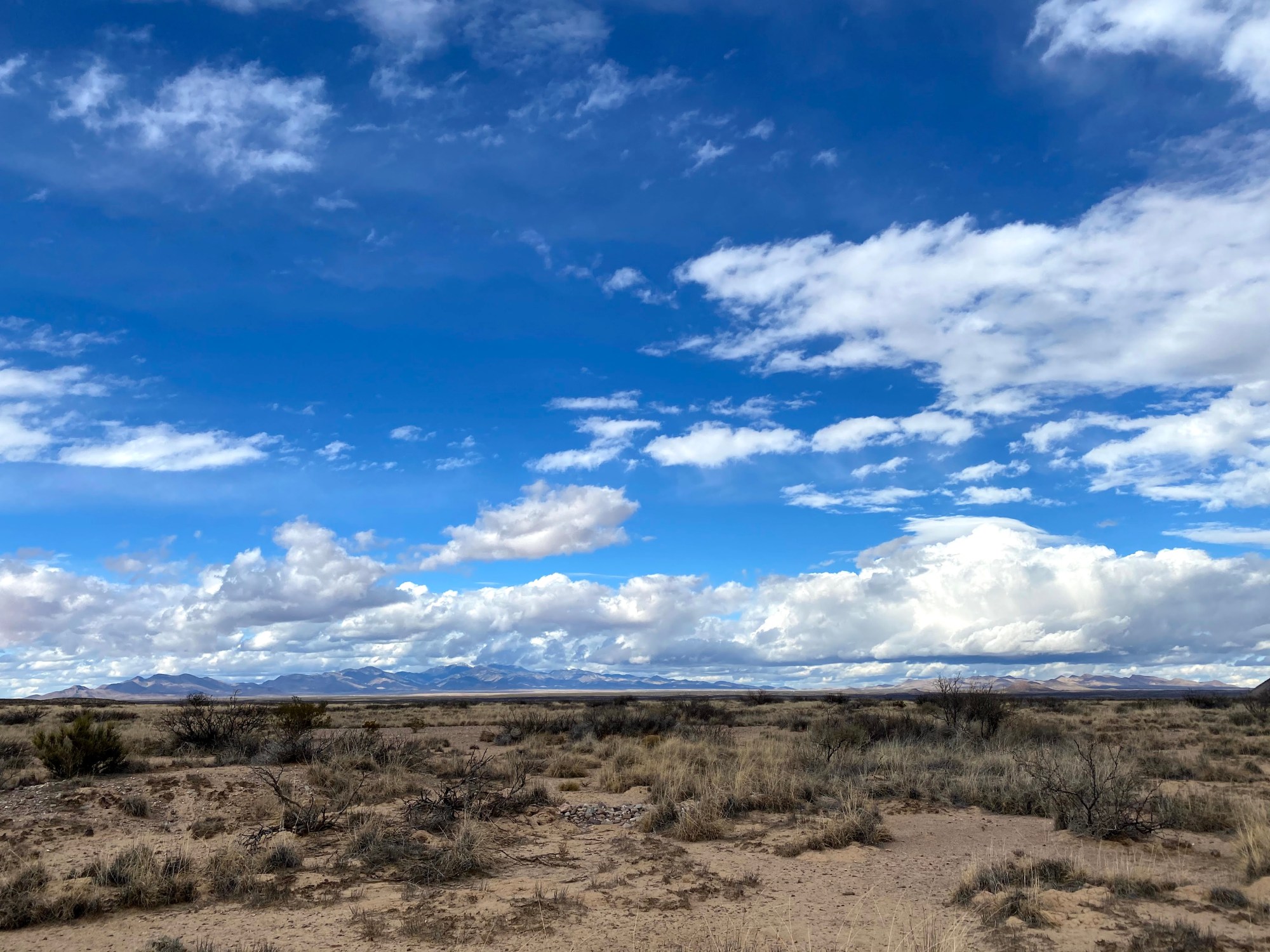
The Trinity Site is only open to the public twice a year in spring and fall. We drove three hours from home in Santa Fe, south to White Sands, where we turned off on a restricted road in a line of other vehicles, being waved in by a man in military uniform. We parked up on a patch of dusty pasture in what felt like the very centre of the desert. Dad joked on the way that we were going somewhere with radiation and we might be glowing afterwards. I was worried but he assured me it would be fine.
From a child’s perspective, there was a disappointing amount to see at the Trinity Site. That is to say: there was almost nothing, it having been destroyed in a nuclear explosion and all. We stood and looked at one stub of concrete and metal poking out of the ground: all that was left of the 100-foot steel tower from which the Gadget was dropped. There was a man with a Geiger counter making warbling, scratchy noises as he waved it around the site and over people’s bodies to let them know there was still some – but not much – radioactivity.
Dad also told us to keep an eye out for trinitite – a type of radioactive glassy rock created during the explosion. Though it’s now illegal to take any found trinitite off the site, this was the late 80s and I doubt anyone was checking. We didn’t find any.
We also went to the nearby bunker and ranch house farther away, at which the scientists assembled the last parts of the bomb. The bunker was an adobe structure – essentially an earthen mound with a few round windows, to which we were lifted up to peer through and try to imagine what it would be like to be a scientist watching the holy terror you had engineered rain down.
Christopher Nolan’s imagining of this moment in the film is gut-wrenching. Where the viewer anticipates a massive boom, Nolan inserts elegant silence that lingers as Oppenheimer himself shakily reckons with what he’s done in the moments between detonation and impact. It’s almost a tease, the seconds floating along agonisingly soundless and weightless. Like being lost in outer space. And it gets to the heart of the whole matter: humans are curious to a dangerous degree about our own destruction. We wait in anticipation for its depiction on film. We almost long for it.
It was in the relieving moments after the blast wave hit and the scientists emerged in celebration from the bunkers waving American flags and honking car horns that I really let loose and sobbed. It felt like the deep and soulful cry of someone who’d been there, reckoning now with what they’d done personally. And I cry again now writing this, sitting in a busy Starbucks, consoling myself with John Green’s story of sitting in a coffee shop and crying every day while writing The Fault in Our Stars.
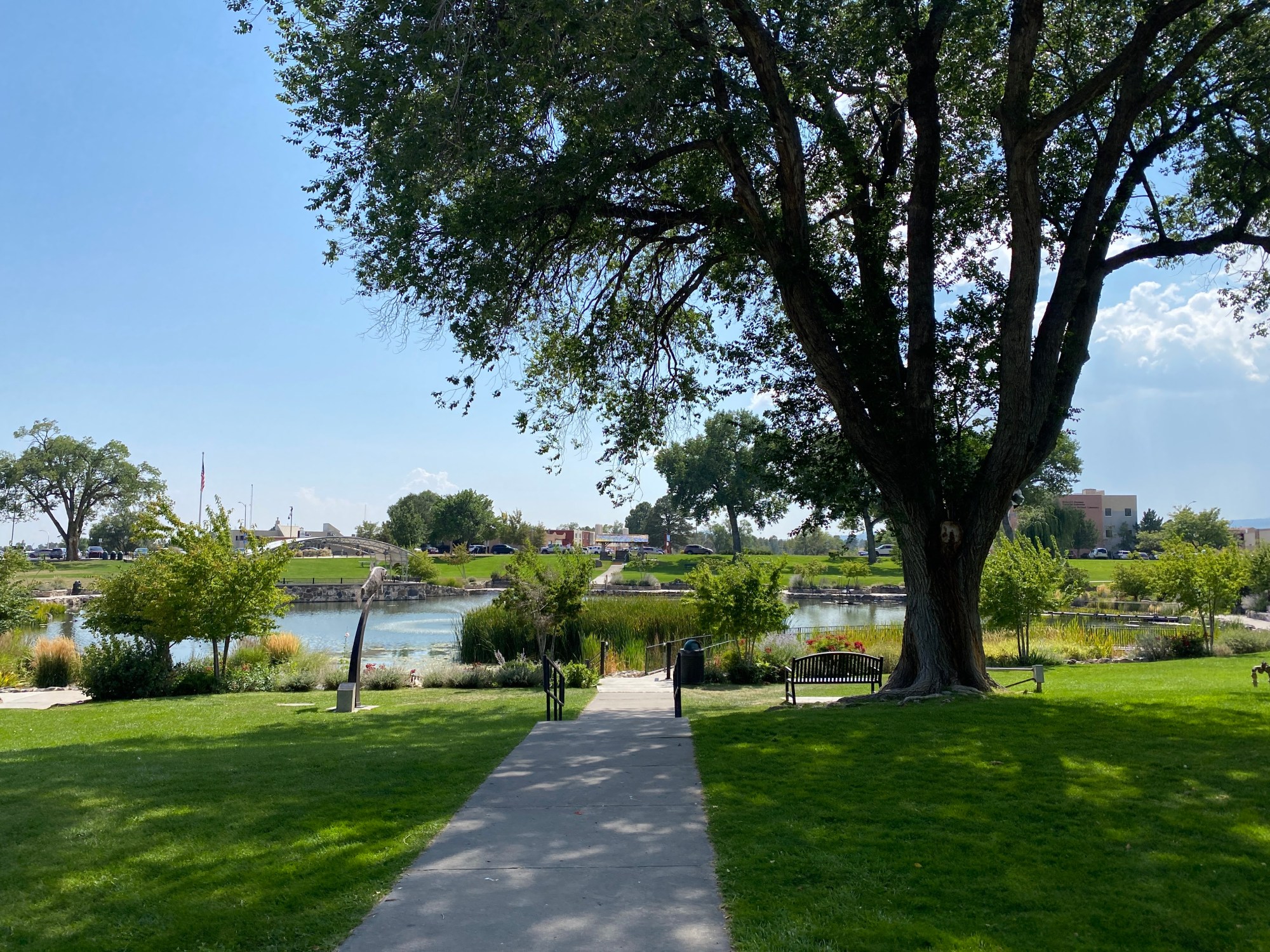
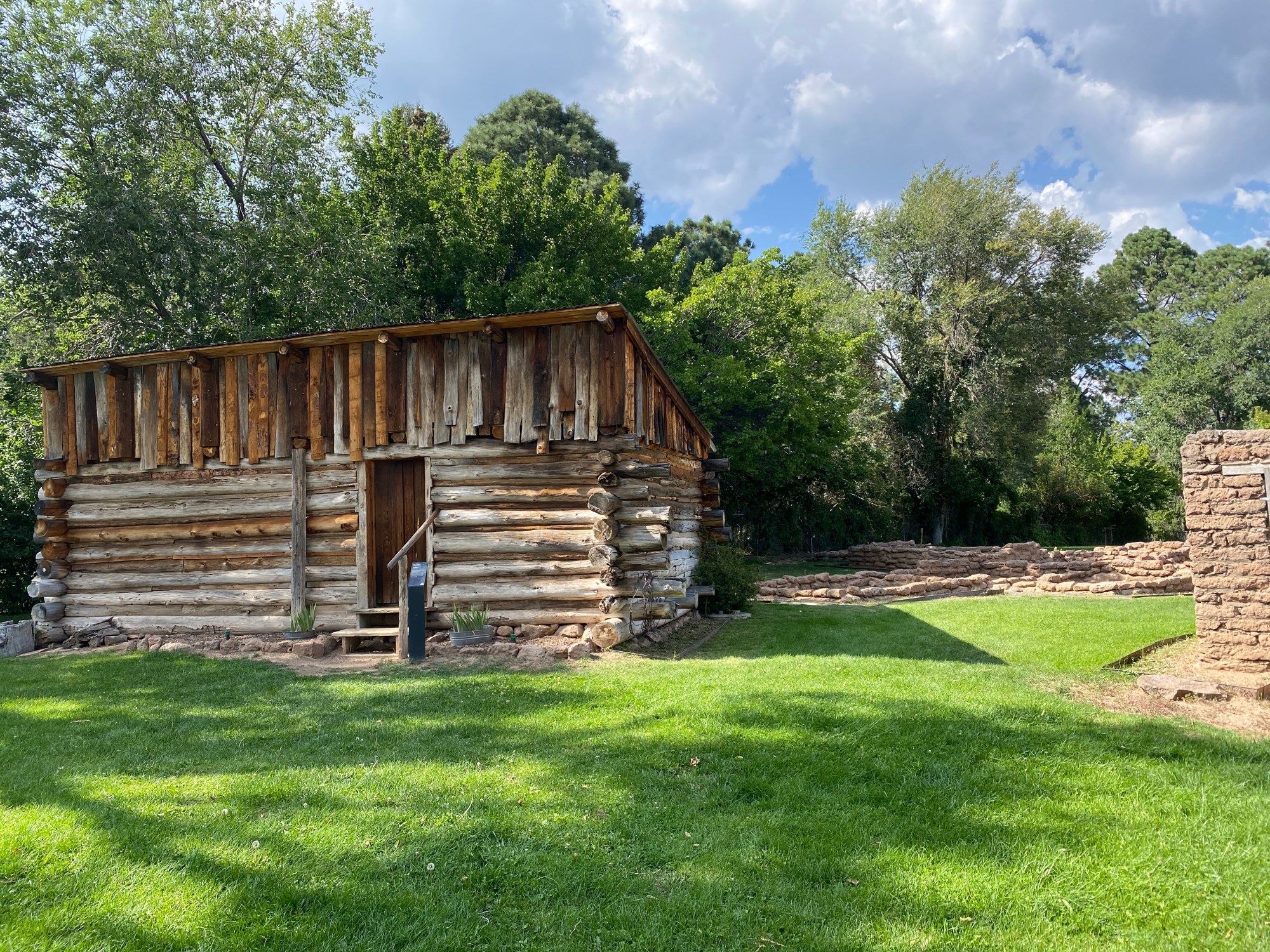
A few years ago, I was home in New Mexico for a visit and my best friend Lauren came along. We took a drive up to Los Alamos, where we went to the Los Alamos History Museum, located in the original buildings of the Manhattan Project – called ‘Bathtub Row’ because they were the scientists’ homes and the only ones in the new secret base luxurious enough to have bathtubs.
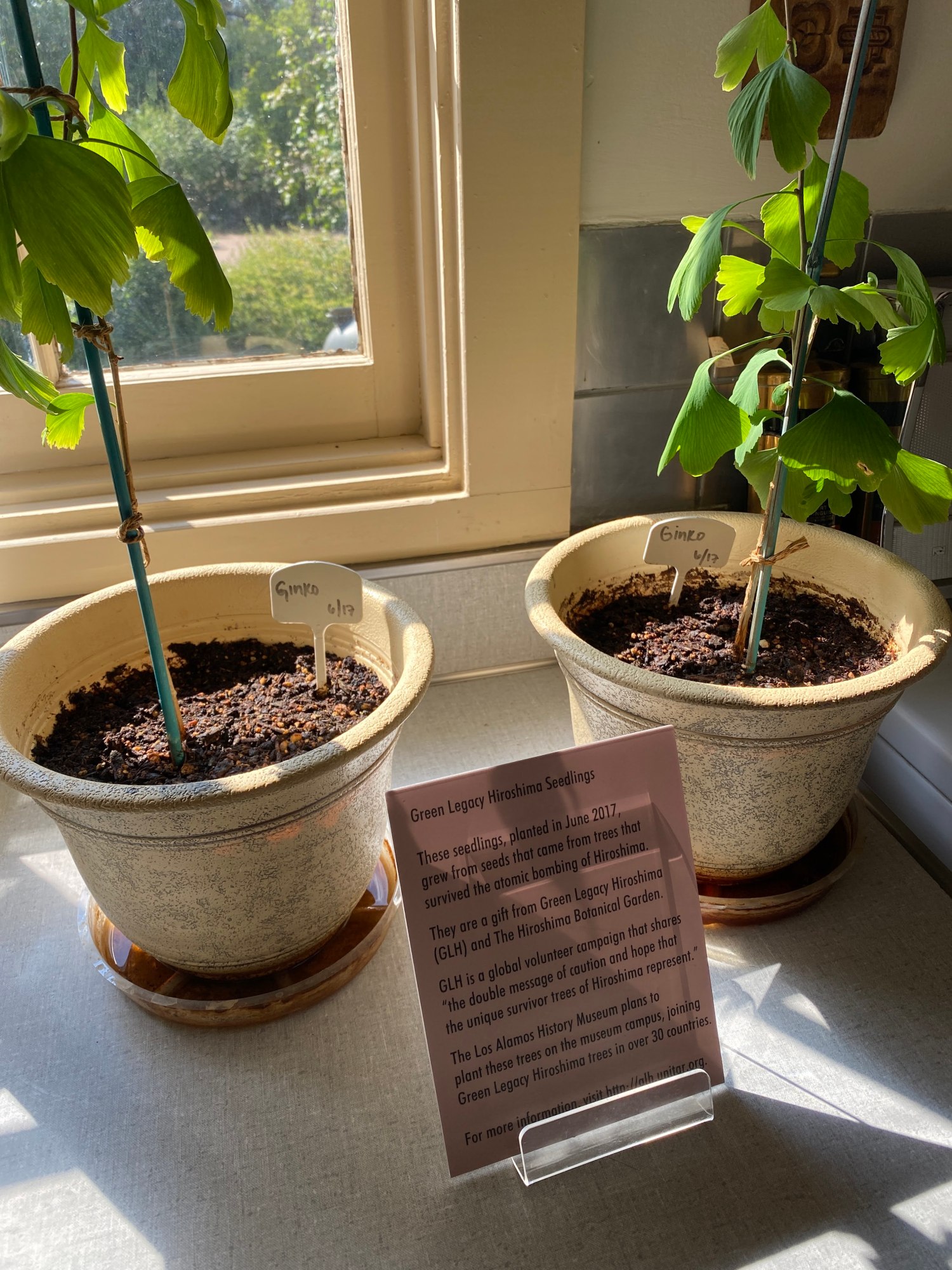
The museum’s main exhibit recounts the history of Oppenheimer and the bomb’s development and then funnels you into a room with seats and a 3-walled screen that shows a loop film of deeply moving interviews with Japanese survivors of Hiroshima and Nagasaki. You then walk around the grounds and can enter several of the ‘Bathtub Row’ houses, including the Hans Bethe House. On the windowsill here in soft sunshine, I admired two seedlings of survivor Ginkgo trees from Hiroshima gifted to Los Alamos, which will be planted in due course (and maybe already have been).
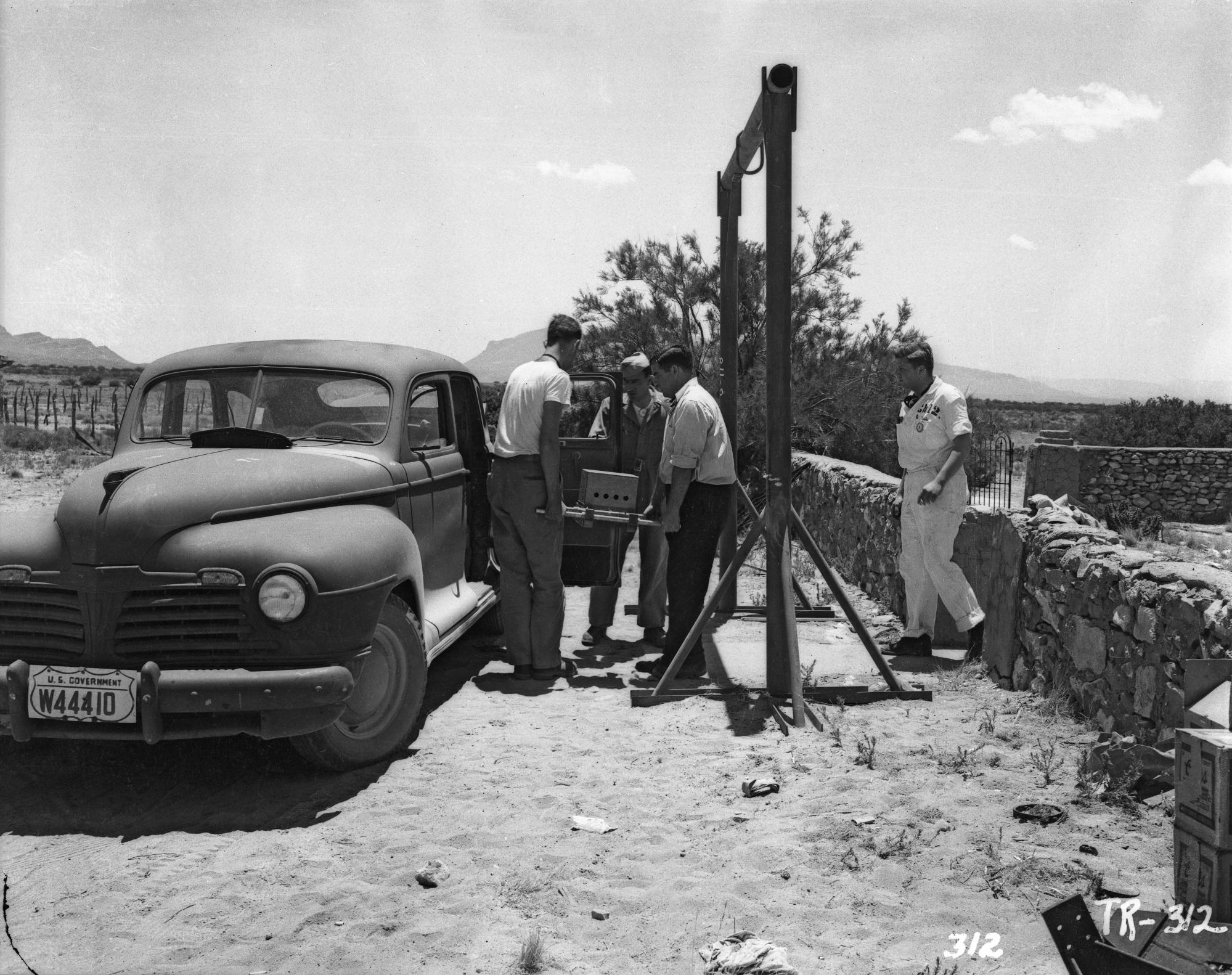
Of the many staggering and horrific aspects of the bomb’s development, the most unreal seems to be that they loaded the Gadget’s detonators into the back of an Oldsmobile sedan, covered it in Navajo blankets and drove it 200 miles south from Los Alamos over dirt roads, including Highway 14 where I grew up, to the Dead Man’s Desert near Alamogordo for the test.
In the years that followed the ‘successful’ development of the atomic bomb, a new nuclear age ‘flourished’ – one that has defined New Mexico and its inhabitants for several generations since. Though Oppenheimer himself recommended closing Los Alamos and giving the land back to the Native Americans, the US military industrial complex was just getting started. Los Alamos was developed into one of the biggest energy labs in the country and weapons manufacture was slated for development with the remit of avoiding nuclear destruction by assuring we had enough weapons to kill the world – then neither we nor the Soviets would ever use them. Would we?
After the war ended, there was no longer the need for the type of early secrecy that gave Los Alamos its nickname as ‘the town that never was’ and in a bid to attract more scientific and engineering minds, the government moved much of its weapons testing to Kirtland, an existing Army air base in Albuquerque. It later became New Mexico’s second secret test lab: Sandia National Laboratory.
By the late 1950s, they were making so many nuclear warheads that top-secret, specialised storage was needed. So, the Department of Defense set to carving out a series of secret tunnels under the Manzano Mountains south of Albuquerque. These bunkers came to be known as Site Able, and later the Manzano Base, named for the mountains, whose name refers to the apple orchards planted there by Spanish colonists.
In the 1950s, my grandfather owned a trucking company based in Hobbs, New Mexico, where he had started his career working in oil fields with his brother. One day as a teen in my grandparents’ living room, I overheard him telling a story to some friends, cigarette in hand, about how he’d trucked all sorts of top secret stuff into those mountains. What it was he didn’t say and I never got the chance or presence of mind to ask him about it further before he died.
Outside of the state and federal government, today the three largest employers in New Mexico continue to be Sandia National Laboratory, Walmart and Los Alamos National Laboratory.
Considering the catastrophically important events that it chronicles, the Los Alamos History Museum is incredibly small and underfunded. Still, it does a balanced job of depicting the scientific achievements of nuclear fission alongside the horrors of what was unleashed, and it catalogues many aspects that were conveniently left out of Nolan’s film – particularly the contributions of women physicists and the Indigenous peoples and Hispanic homesteaders that were evicted from their lands and treated without dignity.
There were also the local people impacted for an entire generation by the nuclear fallout and contamination from the Trinity test. These ‘downwinders’ were excluded from a later federal act that gave compensation to families impacted by subsequent nuclear testing in Nevada. The first-ever downwinders from New Mexico were forgotten. For more information on that, I recommend reading this article by the Nuclear Threat Initiative and following the ongoing work and social media of New Mexican writer Alisa Lynn Valdés, whose mother and grandparents were sheep ranchers among the downwinders from central New Mexico.
I can’t explain it, but I feel strangely and uncomfortably connected to J. Robert Oppenheimer – a vulnerable admission and one I’ve reconsidered making here several times. I’ve tried going through what the reasons might be for this. Growing up in New Mexico, I was at ground zero where the nuclear age began. Another strange synchronicity, I attended Trinity High School (an evangelical school not in New Mexico but neighbouring Lubbock, Texas). Beyond the disturbing recurring dream, in one of several past life regression sessions I’ve done, I saw a life in which I was a Japanese man who survived the Hiroshima bomb and was desperately trying to get on a train to Nagasaki to warn the others. I lost my wife in the second explosion and was trying to change time or history to either save her or apologise for failing. During the regression session, I was able to find her and kiss her.
When Leslie Groves asked him in a letter why he named the test bomb ‘Trinity’, Oppenheimer struggled to answer. “Why I chose the name is not clear, but I know what thoughts were in my mind. There is a poem of John Donne, written just before his death, which I know and love,” he said, referring to Donne’s Hymn to God, My God, in My Sickness. “That still does not make a Trinity,” he continued, “but in another, better known devotional poem Donne opens, ‘Batter my heart, three person’d God.’ Beyond this, I have no clues whatever.”
There are a great many people interested in and more viscerally impacted by these events. Though I cannot explain any of it either, it stays with me, and maybe everything is everywhere all at once.

Photos taken by me or from Los Alamos National Laboratory archive and Wikimedia Commons.

 Megan Eaves-Egenes
Leave a comment